
If you've spent any time reading job search advice, you've probably been told that robots reject your CV before a person ever sees it. Some of that is true. A lot of it is exaggerated, and some of it is made up.
This post sticks to what official careers services and named industry sources actually say about applicant tracking systems, or ATS. Whether you're an electrician, a pharmacist, a barista or a data analyst, the same few rules apply.
What an ATS is
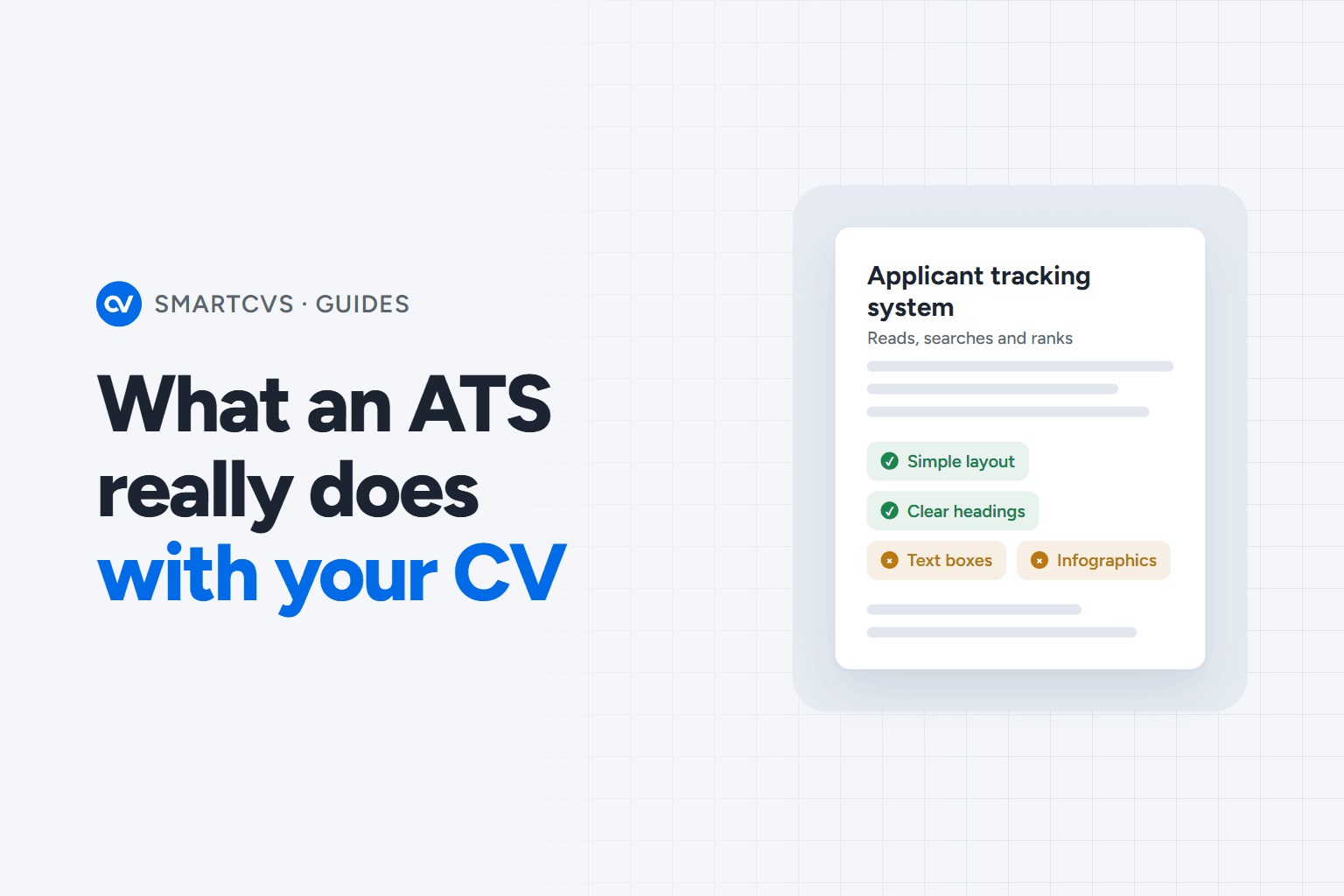
An applicant tracking system is software employers use to manage job applications. Tahatū Career Navigator, New Zealand's government careers service, describes it as software that searches CVs and cover letters and ranks them.
That's the core of it. When you apply online, your CV can go into a system like this rather than straight into someone's inbox. The system reads the text, and the people hiring use it to search and rank applications.
What it does with your CV
In plain terms, an ATS needs to do three things with your CV:
- Read it. It pulls the text out of your file so it can be searched.
- Search it. The people hiring can look for applicants with particular skills, qualifications or experience.
- Rank it. Applications can be ordered by how well they fit what the employer is looking for.
Some online applications also add screening questions. Workforce Australia, the Australian government's employment service, says these are designed to filter out applicants who don't meet the minimum criteria. If an ad asks whether you hold a current driver's licence, a practising certificate or the right to work in the country, answer carefully and honestly. Those answers can matter as much as your CV.
What it can't read
The first step, reading your CV, is where good applicants can come unstuck. If the software can't get the text out of your file, it can't search or rank what it didn't find.
Tahatū Career Navigator says simple, consistent formatting makes sure an ATS can read your CV. The Tertiary Education Commission's CV guide is more specific: remove text boxes, because an ATS won't read infographics or diagrams, and remove images and photos. SEEK's industry advice on ATS-friendly resumes also says to avoid graphics and tables.
So the design touches that look impressive in a template can work against you:
- Skill levels shown as bars, stars or pie charts
- Contact details or headings inside text boxes
- Icons standing in for words, like a phone symbol instead of "Phone"
- Your photo, which the careers service says to leave off anyway
- Two-column layouts built from tables
None of this means your CV has to be ugly. A plain font, clear bold headings and plenty of white space read well for software and people alike. The careers service suggests a plain black font such as Calibri at 11 point.
What it doesn't do
Here's where the myths come in.
It doesn't make the hiring decision. An ATS helps people sort applications. People still read CVs, interview candidates and decide. In the Australian government's Australian Jobs 2025 report, 77% of employers considered interviews the most important step in recruitment.
Not every job goes through one. The same report found over a quarter of employers used word of mouth to fill positions. Plenty of jobs, from a café role to a site labourer's job, are filled through someone you know, a walk-in or a phone call.
There's no good evidence for the "75% of CVs are rejected" claim. You'll see it, or numbers like it, all over the internet. It's widely repeated, but we haven't found a study that supports it, and none of the official sources we use say anything like it. Treat any statistic about how many CVs an ATS "rejects" with suspicion unless it links to where it came from.
Keywords: match the ad, don't game it
Because an ATS searches and ranks, the words on your CV matter. Workforce Australia's advice on resumes is to use the same keywords the employer uses in their job ad.
In practice, that means naming things the way the ad names them:
- A builder whose CV says "site safety" applying for a job that asks for "health and safety compliance"
- A support worker whose CV says "helping clients" when the ad says "personal care"
- A software developer who writes "JS" when the ad asks for "JavaScript"
- A retail assistant who writes "till" when the ad asks for "point of sale" experience
Each one has the experience the ad asks for, just not in its words. Using the ad's terms, where they're true for you, is honest and it helps.
What doesn't help is stuffing. Pasting the whole ad into your CV, or listing keywords for skills you don't have, might catch a search, but a person reads your CV next. They'll notice, and so will your referees.
PDF or Word?
Sources differ, so follow the employer first. New Zealand's careers service suggests sending a PDF unless the employer asks for a Word document. SEEK's ATS guide calls a .docx file often the safest choice. If the job ad or application form names a format, use that one.
Whichever you send, make sure the text can be selected and copied. A scanned CV or a photo of a printed page is a picture of text rather than text, so there may be nothing for the software to search.
A quick ATS-friendly checklist
Before you apply, check that your CV:
- Uses standard headings like "Work history", "Education" and "Skills"
- Has no text boxes, charts, icons or photos
- Keeps contact details as plain text at the top
- Uses the job ad's own words for skills you really have
- Is a PDF or Word file with real, selectable text
- Has a clear file name, like "tama-rewi-CV.pdf"
Our New Zealand CV format guide and Australian resume guide cover the rest, with every source listed.
Where SmartCVs fits
No outside tool can see how a particular employer's ATS is set up, and we won't pretend otherwise. What SmartCVs does is compare your CV with the job ad itself. It lists what the ad asks for, shows which requirements your CV answers, and works out a match score in code rather than by the AI's opinion. Then it tailors your CV to the ad's words without adding employers, dates or qualifications you don't have, and every CV downloads as PDF or Word.
Curious how your CV reads to an ATS? Try the free CV check.