
You've finished the degree, the diploma or the pre-trade course. Now the job ads want "one to two years' experience", even the ones with "graduate" in the title. It's easy to look at your CV and see a single line of study and a part-time job.
There's usually a lot more there than that. A final-year project, a clinical placement, three years behind a bar or on a supermarket checkout: all of it can show an employer what they're looking for. This guide walks through how to put it on the page.
What order to use
In New Zealand, Tahatū Career Navigator, the government's careers service, suggests this order: your contact details, a short personal statement, your key skills, your work history, your education, interests if you want them, and referees.
When your study is your strongest evidence, you can move it up. Workforce Australia says that if you have limited work experience, you can put your education before your employment history. For most graduates applying for a role that uses their degree, that's the better order.
Aim for two pages at most. The careers service says to keep a CV to two pages if you can, and a graduate CV often fits comfortably on one.
Start with a personal statement that points somewhere
Tahatū describes the personal statement as a few lines on who you are and what you're looking for. For a graduate, "Recent graduate looking for my first role" says very little. Name your field, your strongest evidence and the job you want:
- Civil engineering: "Civil engineering graduate with site inspection and report writing experience from a summer internship."
- Nursing: "New graduate registered nurse with placements on medical and surgical wards, applying for a new graduate programme."
- Hospitality and tourism: "Tourism graduate with three years of guest service in hospitality, including leading weekend shifts."
Write a new one for each application. It's short, and it's the first thing an employer reads.
Make your education work harder
Your qualification is more than a line with a date. List your study most recent or most relevant first. The careers service suggests listing the dates, or just the year you finished.
Under your qualification, add the parts that match the job:
- A final-year project or dissertation, and what it involved
- Courses or papers that line up with the job ad
- Placements, practicums or work-integrated learning
- Software, tools or lab techniques you've used
- Awards, scholarships or strong grades, if they're relevant
If you did a project for a real organisation, it can also sit under your experience as its own entry. An IT graduate who built a booking system for a local sports club has done real work for a real client, so say so.
Part-time work counts
Tahatū notes that your work history can include other work experience, not only paid jobs. That covers volunteering and placements, and your part-time job absolutely counts too.
The trick is to describe it in terms of what the new job needs. Compare:
Before: Part-time at Countdown for two years. Never missed a shift.
After: Two years of part-time work at Countdown without missing a shift.
For someone applying for an electrical apprenticeship that asks for someone "reliable and punctual", the second version answers the ad directly. Same job, same facts, framed for the reader. A café job can show customer service and working under pressure. Tutoring can show communication. Coaching a junior team can show leadership. Only claim what you actually did.
Use the ad's words for your skills
Graduate ads often list specific skills: "Excel", "AutoCAD", "stakeholder communication", "health and safety". If you have them, use the same words in your skills section and in the bullet points that prove them. Workforce Australia advises using the same keywords the employer uses in their job ad.
Keep the skills list focused. Six relevant skills beat fifteen generic ones, and "teamwork" means more backed up by a group project than on its own.
What to leave off
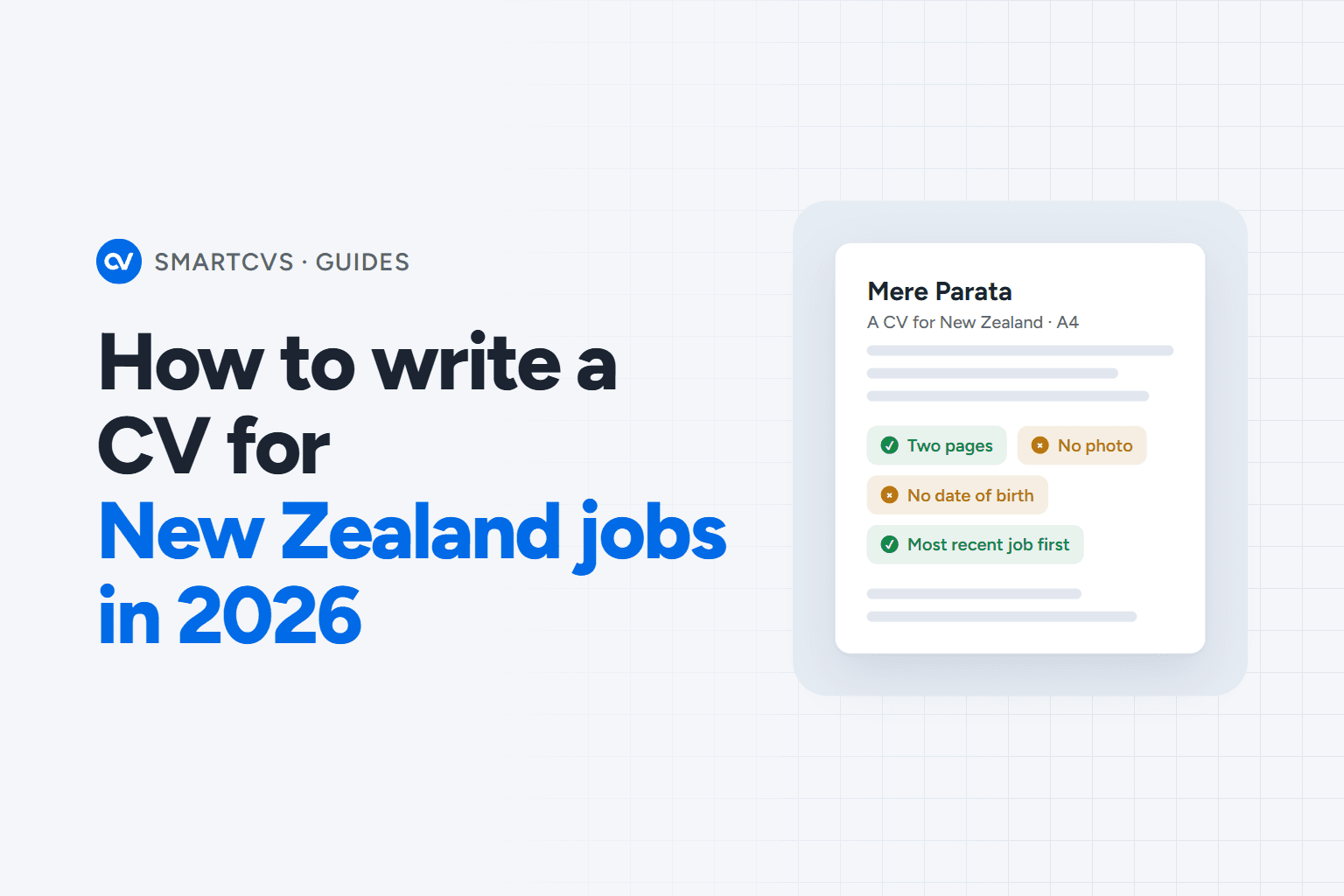
Leave off your photo, your age and your date of birth. Tahatū Career Navigator says it's usually best not to include them, and New Zealand's Human Rights Act lists age among the grounds an employer can't discriminate on. Our New Zealand CV format guide explains the rest, with sources.
Once you have a tertiary qualification, your school results can usually go too, unless the job asks for them. And you don't need a separate career objective: a sharp personal statement does that job better.
Referees when you're new to work
Include referees if the ad asks for them. In New Zealand you'll need at least two, and "Referees available on request" is fine if the ad doesn't ask. As a graduate, a lecturer or project supervisor, a placement supervisor and a part-time manager all make good referees. Workforce Australia says to always get their permission before you list them.
Don't rule yourself out too early
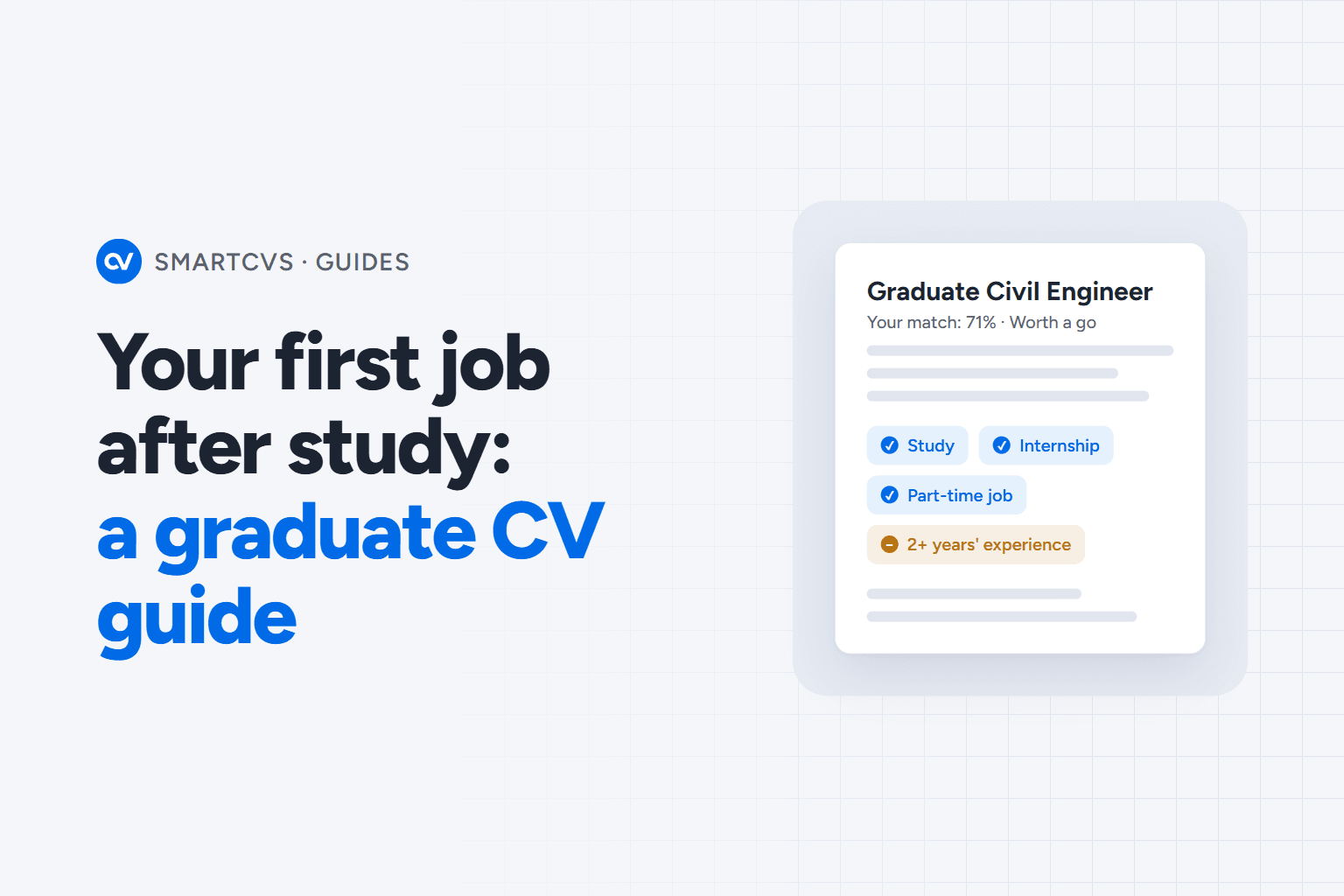
"Two years' experience" in a graduate ad isn't always a hard line. Read the whole ad, count how many of its requirements you can show evidence for, and decide from there. If you answer most of them, it's often worth applying and letting the employer decide. If you're missing something essential, like a registration the role legally needs, that's a different story.
Whatever you decide, don't stretch your dates or invent experience to cover a gap. It won't survive an interview or a reference check.
Write the cover letter too
Tahatū says a cover letter goes with your CV when you apply, and to keep it to one page. For a graduate it's a chance to say why this employer and this field, and to point to the one or two pieces of evidence that matter most.
How SmartCVs helps graduates
Graduate applications come in waves, and tailoring every CV by hand takes hours. SmartCVs for graduates is built for this. Add your degree, placements, projects and part-time work to your profile once, then paste a job ad. SmartCVs shows which of the ad's requirements your study and work already answer, and tailors your CV to the ad's words, with a matching cover letter. A gap is shown as a gap: it can't add employers, dates or qualifications you don't have. The free plan gives you 3 job scans a week, each with a tailored CV and cover letter.
Before your first application, try the free CV check to see how your CV reads.