A builder moving into building control. A nurse moving into health insurance. A chef becoming a food safety auditor, a teacher moving into workplace training, a hospitality manager heading for HR. Every one of them has spent years doing work the new field wants. The problem is that their CV describes it in the old field's language.
A career change CV isn't about hiding where you've been. It's about translating it. Here's how to do that, step by step.
Start with the job ad, not your old CV
It's tempting to start by updating the CV you already have. That CV was written to get you the job you're leaving, so it leads with the skills that mattered there.
Instead, pick two or three real job ads from the field you're moving into and read them closely. Write down what each one asks for: the skills, the tasks, the qualifications and the words they use to describe them. That list is your brief. Your old CV is just the raw material.
Find what transfers
Now go through your work history against that list, and look for the same work under a different name. It's usually there.
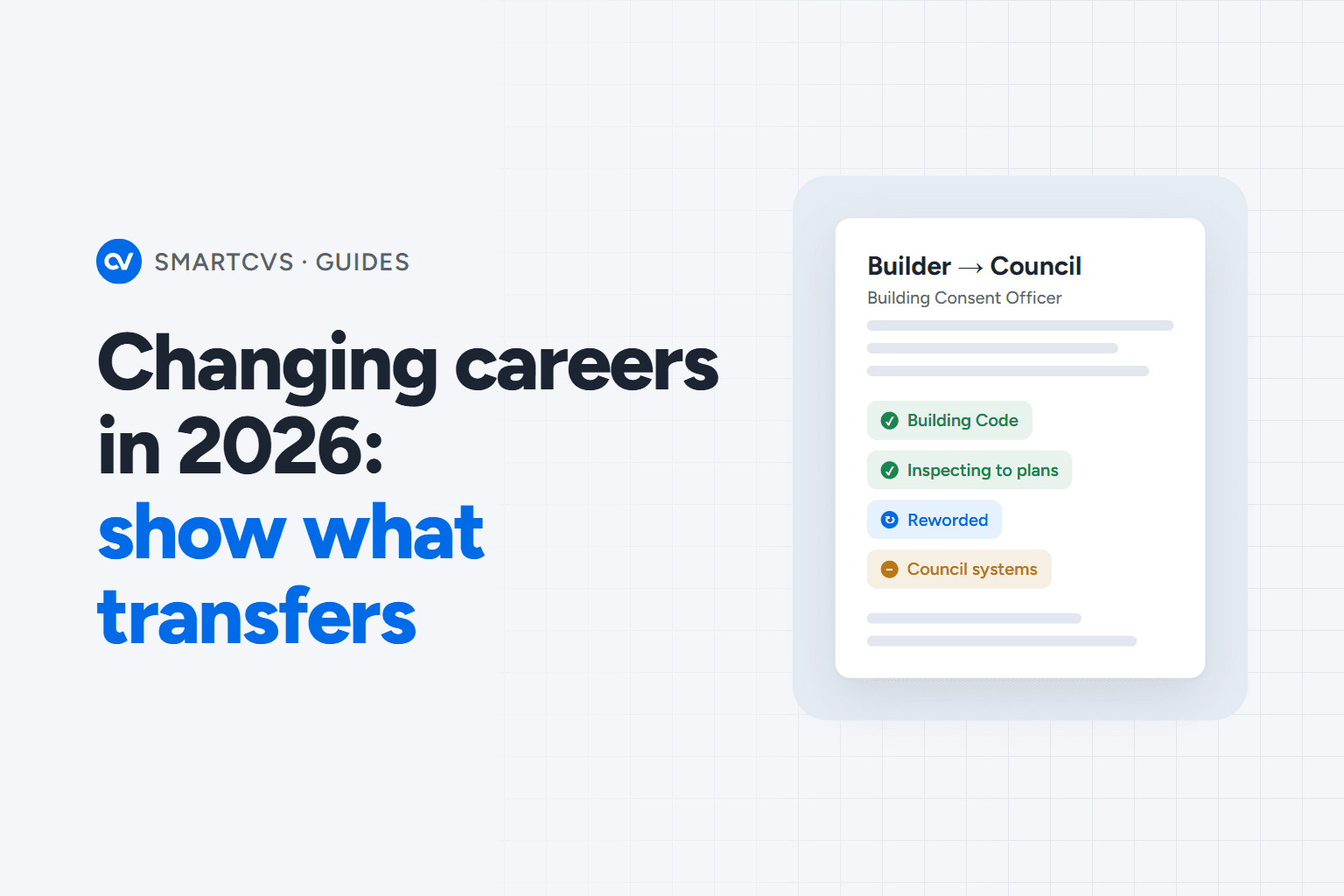
- A builder applying to be a building consent officer. The ad asks for "inspecting work against plans". The builder has spent years checking subcontractors' work against the plans before the council inspector arrived. Same task.
- A registered nurse applying for a clinical claims role. The ad asks for "assessing against criteria". The nurse has assessed every referral against the ward's admission criteria. Same skill.
- A retail store manager applying for a recruitment coordinator role. The ad asks for "managing candidates through a hiring process". The manager has hired and rostered a casual team every summer. Close enough to say so.
- A teacher applying for a learning and development role. The ad asks for "designing training for adult learners". The teacher has planned lessons for years and run professional development sessions for colleagues.
Be honest with yourself about what doesn't transfer, too. If the ad needs a qualification you don't have, that's a real gap. Knowing it early helps you choose roles you can win now, and plan a course for the ones you can't.
Say it in the new field's words
Once you know what transfers, rewrite it in the language the new job uses. Workforce Australia's advice on resumes says to use the same keywords the employer uses in their job ad, and that's doubly true when you're changing fields.
Compare:
Before: Checked the subbies' work against the plans before the inspector came.
After: Inspected subcontractors' work against the plans ahead of each building inspection.
Same job, same years, same facts. The second version just uses words a building control manager would use, and words they'd search for. Keep your claims honest: you're changing the vocabulary, not the story.
Lead with a personal statement that explains the move
Tahatū Career Navigator suggests your CV opens with a personal statement: a few lines on who you are and what you're looking for. For a career changer, this is the most important part of the page. It's where you connect your past to the job in front of you, before the reader has time to wonder why a chef is applying for an audit job.
A good one names your experience, the move and the link between them:
Head chef of ten years, running a kitchen to its Food Control Plan, checking its records and training new staff. Now moving into food safety auditing.
Workforce Australia also recommends tailoring your summary for each role, so rewrite it for every ad.
Put your skills in the right order
Years in one career leave you with a long list of skills. Many of them matter a great deal there, and not at all in the job you want next. A builder's framing and tiling skills don't help a consent officer application, and a nurse's IV therapy skills don't help a claims role.
Put the skills the new job asks for first, and leave off the ones it doesn't. You're not losing them. You're keeping this CV focused on this job.
Think about a skills-focused layout
Most CVs list your jobs in order, most recent first. If your recent job is the one furthest from where you're heading, that can bury the part that matters.
Tahatū Career Navigator suggests a skills-focused CV to show what you've learned, for example during a break from work. The same idea can suit a career change: a strong skills section near the top, backed up by your work history below. Keep the dates and employers accurate and complete either way. The layout changes the emphasis, not the facts.
Count the study and side work you've done for the move
If you've done a course, a certificate or some volunteering to prepare for the change, it belongs on your CV. Tahatū notes that your work history can include other work experience, not only paid jobs. A support worker who's completed a counselling certificate part-time, or a software tester who's been building data dashboards for a community group, should make that visible.
Explain gaps and the reason for the move
Some career changes come after a break, whether for study, redundancy or family. Tahatū suggests explaining a big gap in your cover letter, and the Australian Public Service Commission advises explaining gaps rather than leaving the reader to guess.
Your cover letter is also the place to say why you're making the move. One or two honest sentences are enough: what drew you to the new field, and what you bring from the old one. Tahatū's cover letter advice is to keep the whole letter to one page.
How SmartCVs helps with a career change
This translation work is what SmartCVs for career changers is built around. Paste a job ad from the field you're moving into, and it shows which requirements your past work already answers and which it doesn't. That match is worked out in code from the evidence in your profile, not guessed by the AI. It then rewords your experience in the ad's language and puts the relevant skills first, with a list of every change. Rewrites can't add employers, dates or qualifications, so what's left over is the honest gap.
Each CV comes with a matching cover letter. It leads with the experience that fits the job, but it doesn't know why you're changing careers unless you tell it, so add that sentence yourself before you send it.
Not sure how your current CV reads for a new field? Start with the free CV check.